2025-12-30
Monk, Mass Grave, and Semiconductor: IMAS’s Special Taiwan Studies Lectures at Semester’s End
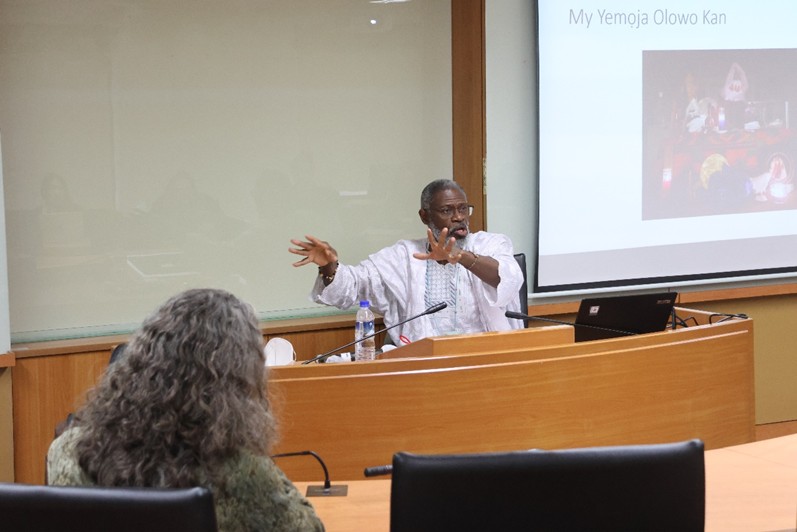
In the final month of the semester, the International Master’s Program in Asia-Pacific Studies (IMAS) organized special lectures and field courses for its students. One of these events was prompted by The Economist’s report, “School for Wildlife Traffickers,” which—against the backdrop of Chinese merchants in Africa pursuing profit by all means—accused the Taiwanese monk Venerable Hui-Li of running Amitofo Care Center (ACC) orphanages in Africa that allegedly trained wildlife poachers. In response to the controversy, IMAS held a special lecture, ‘Meet the Wildlife Trafficker,’ with Venerable Hui-Li sharing firsthand experiences from Africa.
Venerable Hui-Li explained that over the past twenty years, with support from Taiwanese civil society, he has established seven orphanages across six African countries, caring for more than 2,300 orphans. In addition to providing food and shelter, the orphanages offer a complete education at least until the age of eighteen. Depending on individual circumstances, some students are further supported in pursuing university education, domestic and international.
Alongside meeting each country’s national education requirements, the curriculum includes Chinese language instruction, vegetarian practices, and Buddhist principles associated with Taiwanese Buddhism, particularly the doctrine of non-killing. From this perspective, accusations that he, as a monk, was involved in ivory trafficking are difficult to comprehend.
According to his understanding, the incident described in the report resembled entrapment. People in Malawi generally have low incomes, so they earn extra money whenever they have the opportunity. A reporter allegedly entered a Malawian orphanage under the pretense of charitable work, gained trust, and then paid a local staff member to procure ivory. After the staff member managed to obtain the ivory, he was arrested, and the report was subsequently published.
For many students, this lecture marked their first exposure to the scale of Taiwanese NGOs operating in Africa. As a result, they raised numerous questions, particularly regarding differences between ACC and Western charitable organizations, the reception of Buddhism in African societies, and broader concerns related to colonialism.
Professor Philip Hsiaopong Liu remarked that he took notice of this news because one of his NCCU graduate students was from ACC, and that he was pleased to offer students the opportunity for firsthand engagement with figures at the center of international media attention. He further observed that, with China’s growing presence in Africa and the cultural proximity across the Taiwan Strait, Western criticism directed at China can at times be readily extended to Taiwanese organizations—an issue that warrants further academic research.
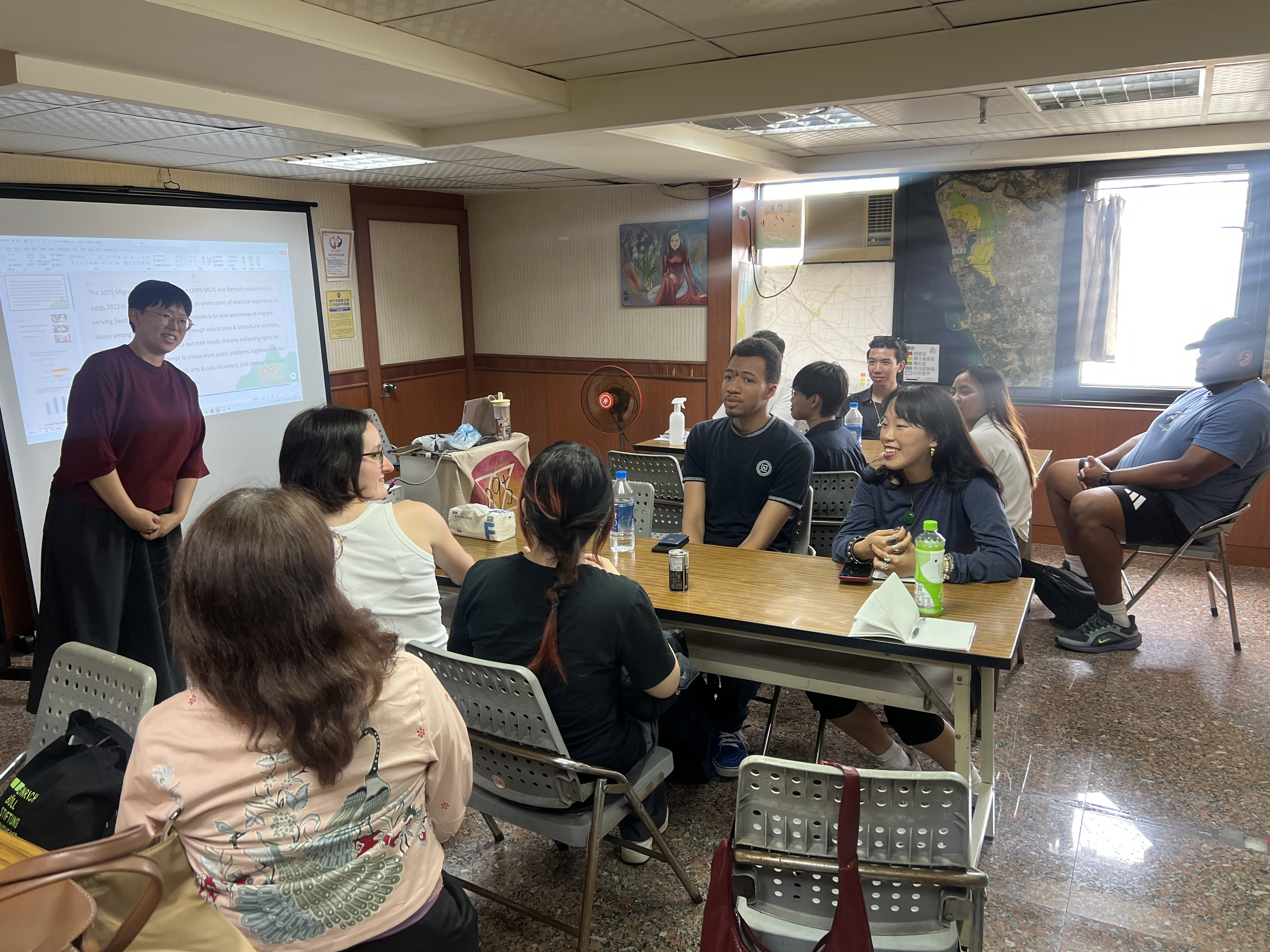
Another special course, titled “The Final Journey of a Communist Suspect in 1950s Taiwan,” aimed to help students experience the history of Taiwan’s White Terror period from approximately seventy years ago. The course began with a visit to Machangding Park, where students learned about the execution site where alleged communist suspects were shot. They were then transported by minibus to Liuzhangli, formerly a burial ground on the outskirts of Taipei, where the executed were hastily buried. This area, where bodies were casually interred during the 1950s, was not discovered and reorganized until 1993. It has since been transformed into the Memorial Park for Victims of the Martial Law Period.
For many students, this was their first encounter with a mass grave. Particularly striking was the presence of a neighboring Muslim cemetery, where Muslims from various provinces of China are buried, including military leaders, a former governor of Xinjiang, and Uyghur individuals. Experiencing these burial sites enabled students to move beyond textbooks and news reports and directly sense the historical complexity of cross-strait relations.
In addition, IMAS introduced a new course this semester titled “From Deerskins to Semiconductors,” which examines Taiwan’s international trade and social development from the era of Dutch colonization to the present day. In addition to lectures by historians, the course included economic history sessions at National Tsing Hua University, an overview of modern scientific development delivered by a physics professor, and an introduction to contemporary AI applications taught by a communications studies scholar.
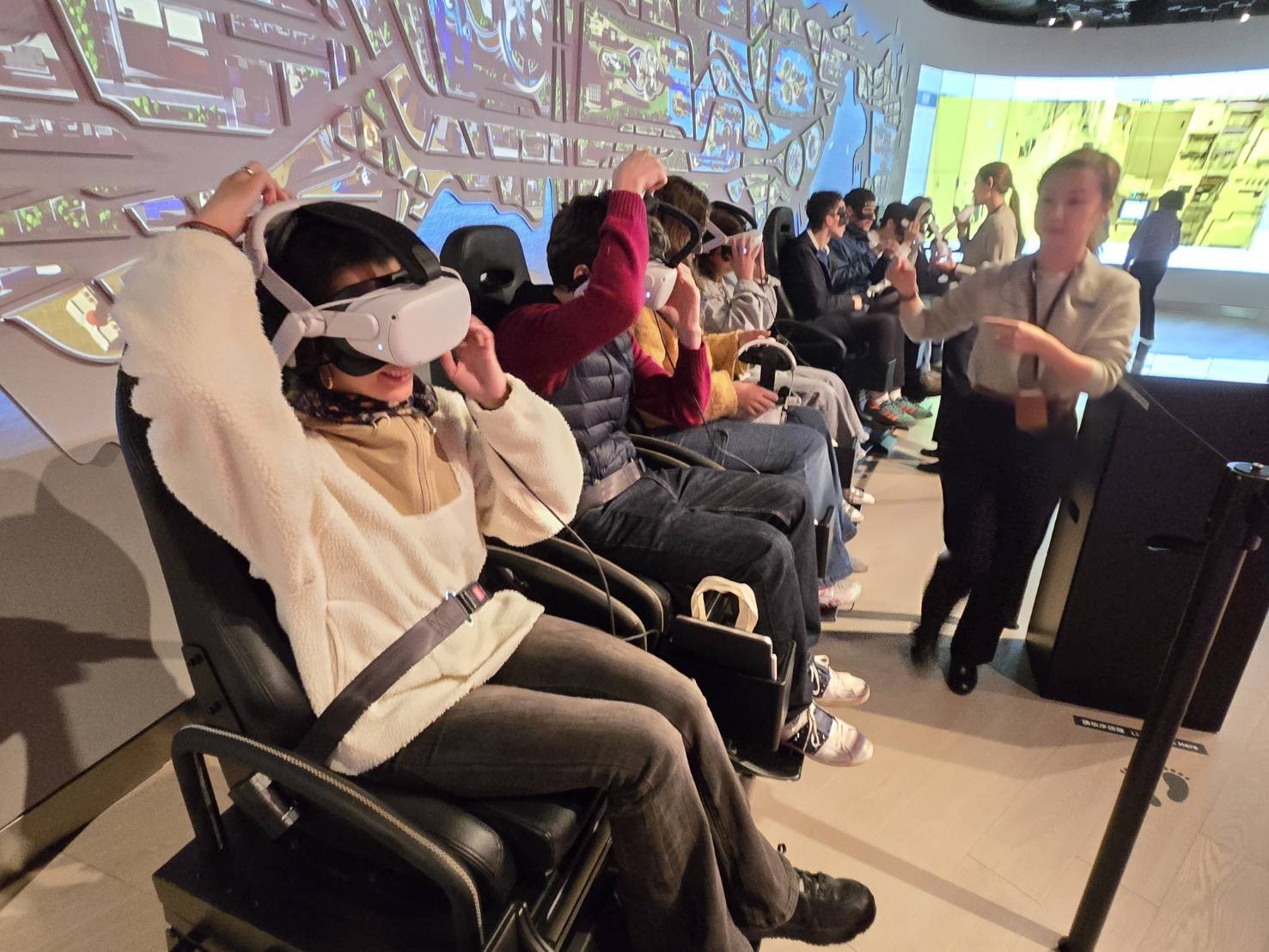
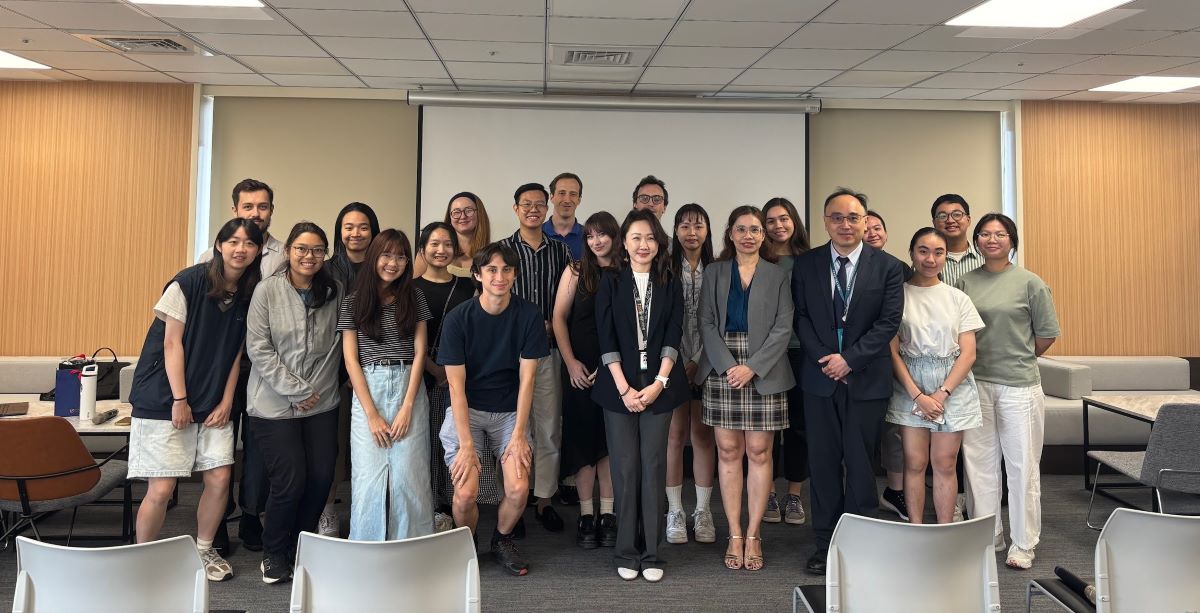
A distinctive component of the course was a series of site visits to semiconductor-related industries. Students visited Taiwan Semiconductor Manufacturing Company (TSMC), which accounts for more than 60 percent of the global foundry market, allowing them to experience Taiwan’s semiconductor industry firsthand. They also toured WPG Holdings (WT Microelectronics), the world’s leading semiconductor distributor by market share. Mr. Ming-chuan Wang, Director of Human Resources at WPG, personally welcomed the IMAS students and explained that the company actively seeks young professionals from around the world with backgrounds in the humanities and social sciences, as such expertise is valuable for expanding global business operations.
Overall, students found these courses highly practical and were particularly surprised by the openness of technology companies to considering them as potential future employees. IMAS Director Professor Philip Hsiaopong Liu emphasized that when international students come to Taiwan, they should be able to experience Taiwan’s connections with the world, as well as understand their own place within those connections. Through specialized courses conducted both on and off campus, the program offers students hands-on engagement in international, cross-strait, humanistic, and technological relationships. Looking ahead, IMAS will continue striving to develop innovative courses that further enrich students’ academic and practical learning experiences.





.jpg)



.jpg)